Beyond the Makeup: The Incredible Journey of Doug Jones
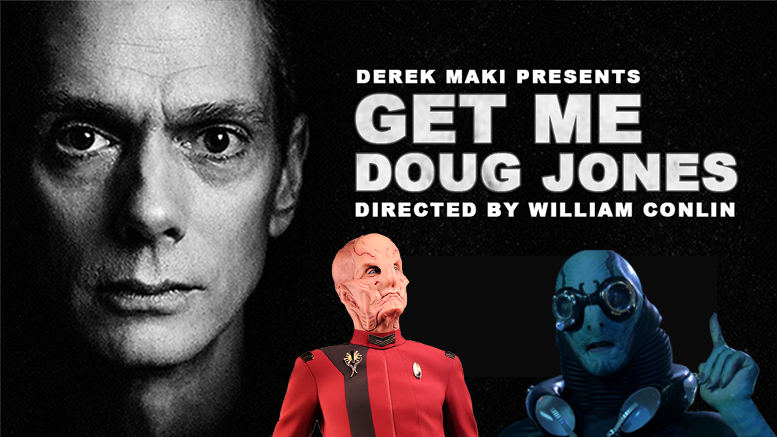
Welcome back to the podcast and the blog, where we dive deeper into the fascinating worlds we explore on the show. In our latest episode, we had the immense pleasure of delving into the career of a true Hollywood treasure, an actor who has redefined what it means to embody a character, often from beneath layers of intricate prosthetics and fantastical designs. We're talking, of course, about Doug Jones. If you haven't already, I highly encourage you to listen to our full discussion and hear his incredible stories firsthand. You can find it right here: Actor Doug Jones | The Brett Allan Show | "Get Me Doug Jones". This blog post is an extension of that conversation, a chance to explore in more detail the remarkable path that led a talented performer from the heartland of America to the forefront of creature performance in cinema and television.
From Midwest Roots to Hollywood Dreams
Doug Jones's story is one that defies easy categorization. He's not the typical leading man with a chiseled jawline, nor is he the seasoned character actor who relies solely on raw vocal talent. Instead, Jones has carved out a unique and highly respected niche for himself by bringing to life some of the most memorable and emotionally resonant non-human characters in modern cinema. His journey began far from the glitz and glamour of Hollywood, in the unassuming landscapes of the American Midwest. Born and raised in Iowa, Jones’s early life gave no overt indication of the fantastical roles he would one day inhabit. However, even in these early years, there was a spark of performance, a nascent desire to entertain and to transform.
The Midwest, with its wide-open spaces and often simpler way of life, provided a different kind of foundation for a young performer. It's a landscape that fosters a certain groundedness, a connection to the tangible world, which, ironically, makes his ability to embody the utterly alien all the more remarkable. It's here that Jones cultivated his work ethic and his innate sense of observation – skills that would prove invaluable as his career unfolded. While the specific details of his childhood might not be as widely publicized as his later on-screen personas, it's important to acknowledge this origin. It speaks to the idea that extraordinary talent can bloom anywhere, nurtured by passion and dedication, regardless of the initial surroundings. This early period was about building a dream, one that seemed distant but was fueled by an unwavering belief in the power of performance.
The Foundation: Mime and Early Roles
The true genesis of Doug Jones's unique skillset lies in his early embrace of mime. Long before he was battling otherworldly creatures or embodying ancient spirits, Jones honed his craft through the silent art of mime. This discipline is far more than just making funny faces; it's about the absolute mastery of physical storytelling. Mime teaches an actor to communicate emotion, intention, and narrative through the subtlest of gestures, the most precise of movements. It’s about creating worlds out of thin air, about making the invisible visible. For Jones, mime was the perfect crucible for developing the physical control, the expressiveness, and the deep understanding of character that would become his trademarks.
His work in mime wasn't just a hobby; it was his professional entry into the performance world. He performed as a mime in corporate events, on cruise ships, and at various public functions, steadily building his experience and refining his unique abilities. This period was crucial in developing his physical vocabulary. He learned to convey a vast range of emotions and actions without uttering a single word, relying entirely on his body, his face, and his presence. This foundational skill set is precisely what makes him so invaluable in roles where dialogue is limited or non-existent, and the character's essence must be conveyed through physicality alone.
From mime, Jones gradually transitioned into acting roles, often in commercial work and smaller independent projects. These early acting gigs, while not as glamorous as his later successes, were vital stepping stones. He gained experience in front of cameras, learned the rhythms of a film set, and began to understand how his mime training could be applied to more conventional acting. Roles in projects like “Mac Tonight” (a crescent moon character for McDonald’s commercials) and small appearances in larger films provided him with the practical experience needed to navigate the demands of Hollywood. It was during this time that he started to attract the attention of casting directors who recognized his unique physicality and his ability to disappear into a role. He was proving that his dedication to the craft, particularly his foundation in mime, was a powerful asset in the world of film and television.
Becoming a Creature Chameleon: Key Roles and Transformations
The transition from a mime and an actor with a distinctive physicality to a go-to performer for creature roles was not an overnight phenomenon. It was a series of strategic steps, often involving sheer perseverance and the willingness to embrace the challenging, the unusual, and the outright monstrous. Jones's ability to inhabit non-human characters with such depth and humanity began to shine through in a series of memorable performances that gradually built his reputation.
One of the early, significant roles that showcased his burgeoning talent was his portrayal of Billy Butcherson in “Hocus Pocus” (1993). While the film is a cult classic, his performance as the zombie ex-boyfriend with a penchant for exposition and a truly ghastly appearance was a standout. It demonstrated his comfort and skill in wearing prosthetics and bringing a character to life, even one with limited screen time. This was followed by a role in Tim Burton's iconic “Batman Returns” (1992) as Penguin's henchman, showing his ability to work within a large-scale, high-profile production and contribute to a visually striking world. These roles, while perhaps not the lead, were instrumental in demonstrating to Hollywood that Doug Jones possessed a rare combination of physical talent, expressiveness, and dedication to the demanding craft of prosthetic makeup performance.
Another pivotal early role was his recurring guest appearance as Abe Sapien in the television series “Buffy the Vampire Slayer.” While his role in the film adaptation of “Hellboy” would solidify his status as the definitive Abe Sapien, his early work on “Buffy” allowed him to develop the character and further refine his approach to playing intelligent, yet physically alien, beings. His performance as the kindly, intellectual amphibious creature was a testament to his ability to convey vulnerability and depth, even within a genre often associated with pure spectacle. These early creature roles weren't just about physical transformation; they were about finding the heart and soul of beings that were fundamentally different from humans, a talent that would become his hallmark.
The Big Leagues: Guillermo del Toro and Beyond
It is impossible to discuss the career of Doug Jones without acknowledging the profound impact of his collaborations with acclaimed director Guillermo del Toro. Del Toro, a filmmaker renowned for his fascination with monsters and his ability to imbue his creations with profound emotion and thematic depth, found in Doug Jones the perfect interpreter for his most iconic creations. Their partnership began with “Mimic” (1997) and truly blossomed with “Hellboy” (2004), where Jones brought the stoic and powerful Abe Sapien to life.
Abe Sapien, with his fish-like features, telepathic abilities, and deeply empathetic nature, became one of Jones’s signature roles. His performance was a masterclass in conveying complex emotions and motivations through a highly stylized and physically demanding makeup. He wasn't just playing a monster; he was playing a character struggling with identity, loyalty, and love. This nuanced portrayal elevated Abe Sapien from a mere plot device to a beloved and relatable figure within the “Hellboy” universe.
The collaboration reached its zenith with “Pan’s Labyrinth” (2006). In this dark fantasy masterpiece, Jones delivered a performance that was nothing short of breathtaking. He portrayed the Faun, a creature of ancient magic and moral ambiguity, and the Pale Man, a terrifying, eye-obsessed entity. For the Faun, Jones managed to imbue a creature of myth with profound sadness and a paternal warmth, making him a pivotal figure in the film’s emotional core. The Pale Man, on the other hand, was a spectacle of horror, yet Jones’s physicality and stillness made him intensely unsettling. His work in “Pan’s Labyrinth” earned him widespread critical acclaim and solidified his reputation as one of the most talented actors working in prosthetics today. The film’s critical and commercial success, including multiple Academy Awards, put Doug Jones firmly in the spotlight, proving that creature performances could be central to critically lauded and artistically significant films.
Following “Pan’s Labyrinth,” Jones continued his fruitful relationship with del Toro, most notably in “The Shape of Water” (2017). Here, he played the Amphibian Man, a mysterious and benevolent creature captured and experimented upon by the government. This role was particularly challenging, as it required Jones to convey a deep sense of longing, curiosity, and love through purely physical means. His interactions with Sally Hawkins' character, Elisa, were filled with a tenderness and vulnerability that transcended language and species. The film’s Best Picture Oscar win further cemented the impact of Jones’s performance, demonstrating that his ability to humanize the inhuman was a powerful force in cinema. Beyond del Toro’s films, Jones has lent his talents to a wide array of other projects, including “Fantastic Four: Rise of the Silver Surfer” (as the Silver Surfer, a role that demanded incredible physical control and subtle expressiveness) and, more recently, television series like the critically acclaimed “What We Do in the Shadows” (as the ancient vampire visitor, Count Laszlo’s rival) and the groundbreaking “Star Trek: Discovery” (as Saru, a Kelpien Starfleet officer). These diverse roles highlight his versatility and his continuous commitment to pushing the boundaries of character performance.
Beyond the Prosthetics: The Personal Side of Doug Jones
While Doug Jones is undeniably a master of the prosthetic transformation, his career is far from being solely about the makeup. What truly sets him apart, and what makes his story so compelling, is the humanity he brings to every character, regardless of their physical form. This depth of performance stems from a profound understanding of acting and a genuinely warm and generous personality. The documentary about his life, which we discussed in our episode, emphasizes this personal side – his deep connections with family, friends, and fans. This isn't just a man who puts on a costume; it's an artist who invests himself fully in his roles, drawing from his own life experiences and emotions.
Jones is known for his incredible work ethic and his meticulous preparation. He doesn't just wear the prosthetics; he *becomes* the creature. He spends countless hours working with makeup artists and prosthetics teams, not just to ensure the visual accuracy of the character, but to understand how the suit and makeup affect his movement and expression. This collaborative approach is a testament to his professionalism and his desire to create the most authentic performance possible. He often talks about finding the "heart" of the character, the core emotion or motivation that drives them, whether they are a mythological being or an alien ambassador. This focus on inner life is what allows him to connect with audiences on a deeply emotional level, making characters that could easily be terrifying or alien feel relatable and even lovable.
Furthermore, Jones is renowned for his genuine kindness and humility. Despite his considerable success and his status as a Hollywood legend, he remains approachable and appreciative. He often engages with fans at conventions, sharing stories and insights with enthusiasm. This personal connection with his audience is a crucial part of his legacy. It reinforces the idea that behind the elaborate makeup and the fantastical characters is a real person, a dedicated artist who genuinely loves what he does and appreciates the impact his work has on others. His philosophy, often shared in interviews, centers on positivity, perseverance, and the transformative power of storytelling, lessons that extend far beyond the confines of the film set.
Legacy and Impact: Why Doug Jones is a Hollywood Legend
Doug Jones's legacy in Hollywood is multifaceted and enduring. He has not only achieved a level of success rarely seen for actors in specialized roles but has also redefined what is possible within the realm of creature performance. He has proven that an actor can be the emotional anchor of a film, even when their face is hidden beneath layers of latex and silicone. He is often compared to the classic Hollywood horror icons like Lon Chaney and Boris Karloff, and for good reason. Like them, he uses his physical prowess and his understanding of character to create memorable, impactful beings that linger in the audience's imagination long after the credits roll.
His impact extends to the craft of filmmaking itself. Jones’s consistent ability to deliver nuanced and compelling performances in physically demanding roles has inspired a new generation of actors and makeup artists. He has elevated the art of prosthetic performance, demonstrating that it is not merely a technical challenge but a profound acting discipline. His success has opened doors for more diverse casting in creature roles, proving that talent and emotional depth can come in many forms, and that physical transformation can be a powerful tool for storytelling. He has legitimized roles that were once considered secondary, proving they can be central to a film's success and artistic merit.
Beyond his professional achievements, Jones's personal integrity and his dedication to his craft serve as an inspiration. He embodies the spirit of a true artist, one who is passionate, disciplined, and committed to excellence. His ability to consistently deliver exceptional performances across a wide range of genres and characters is a testament to his talent and his unwavering dedication to his craft. He is a legend not just for the monsters he has played, but for the humanity he has revealed within them, and for the enduring impact he has had on the landscape of modern cinema and television.
Conclusion: Celebrating an Unforgettable Career
As we wrap up this deep dive into the extraordinary career of Doug Jones, it’s clear that we’ve only scratched the surface of his incredible journey. From his humble beginnings in the Midwest, through his foundational training in mime, to his iconic collaborations with visionary directors, Jones has carved out a truly unique and inspiring path in Hollywood. He is a testament to the power of dedication, the beauty of physical storytelling, and the ability to find the human heart in the most unexpected of creatures.
Our latest podcast episode, "Get Me Doug Jones", offers an even more intimate look at his life and work, featuring his own stories and insights. I urge you to give it a listen to truly appreciate the man behind the monsters. Doug Jones isn’t just an actor who disappears behind prosthetics; he’s an artist who brings light, depth, and profound emotion to every role he inhabits. His legacy is one of innovation, inspiration, and the unwavering belief that every character, no matter how monstrous, deserves a soul. Thank you for joining us on this exploration, and we’ll see you in the next episode!

‘Baywatch’ Is Back: First Trailer Reveals a New Generation of Lifeguards